 Journal · Myth
The vein test, and why it fails
Ten seconds, no gear, and an answer that depends on the lamp.
By Ximena · 4 min read · Updated Oct 5, 2026
The vein test is not a reliable way to find your undertone.
The rest of the answer
It says blue veins mean cool and green veins mean warm, but what you see depends on how thick your skin is, how deep the vessel sits and the light you are standing in, and none of those is undertone. The pages that teach it call it a first clue, and I found no peer-reviewed study that checks it. On deeper skin the veins can be hard to see at all.
What the test claims
"If your veins look green, you are warm. If they look blue, you are cool."
MythI get why it spread: it costs nothing and feels like data.
Why, and how solid
You have probably read it: blue veins mean cool, green veins mean warm. I get why it spread. It costs nothing, it is private and it feels like data.
Myth Vein color depends on skin thickness, vessel depth and light more than on undertone, and I found no peer-reviewed study that checks the test.
Why it fails
Vein color depends on skin thickness, vessel depth and light, and none of those is undertone.
Why, and how solid
What you see in a vein on your wrist depends on how thick your skin is, how deep the vessel sits and the light in the room. None of those is your undertone. The same wrist can read differently by a window and under a lamp.
Clinics that write about veins say this themselves. They list light, skin thickness and vessel depth as things that change what you see, and they call the test a first clue. That is the best source I found, and it is a clinic blog, not a study.
Deeper skin makes it harder. Veins can be hard to see at all, and one color-analysis app blog says that vein and sun-reaction tests lose accuracy on deeper skin because melanin affects how visible veins are. It is an industry source, so I treat it as a claim and not a finding. The page on deep skin covers what I do instead.
Olive skin gets its own trouble. Commercial sources describe it as a green-gold cast that gets misread in both directions, warm one day and cool the next, so a test that only offers warm or cool has nowhere to put it. The olive skin page goes further.
The same wrist can read differently by a window and under a lamp.
What to try instead
#E58EA9Does it turn your face grayer?#F26B5BOr more yellow-green?Sit by a window, in daylight, with no colored wall behind you.
TraditionStrong
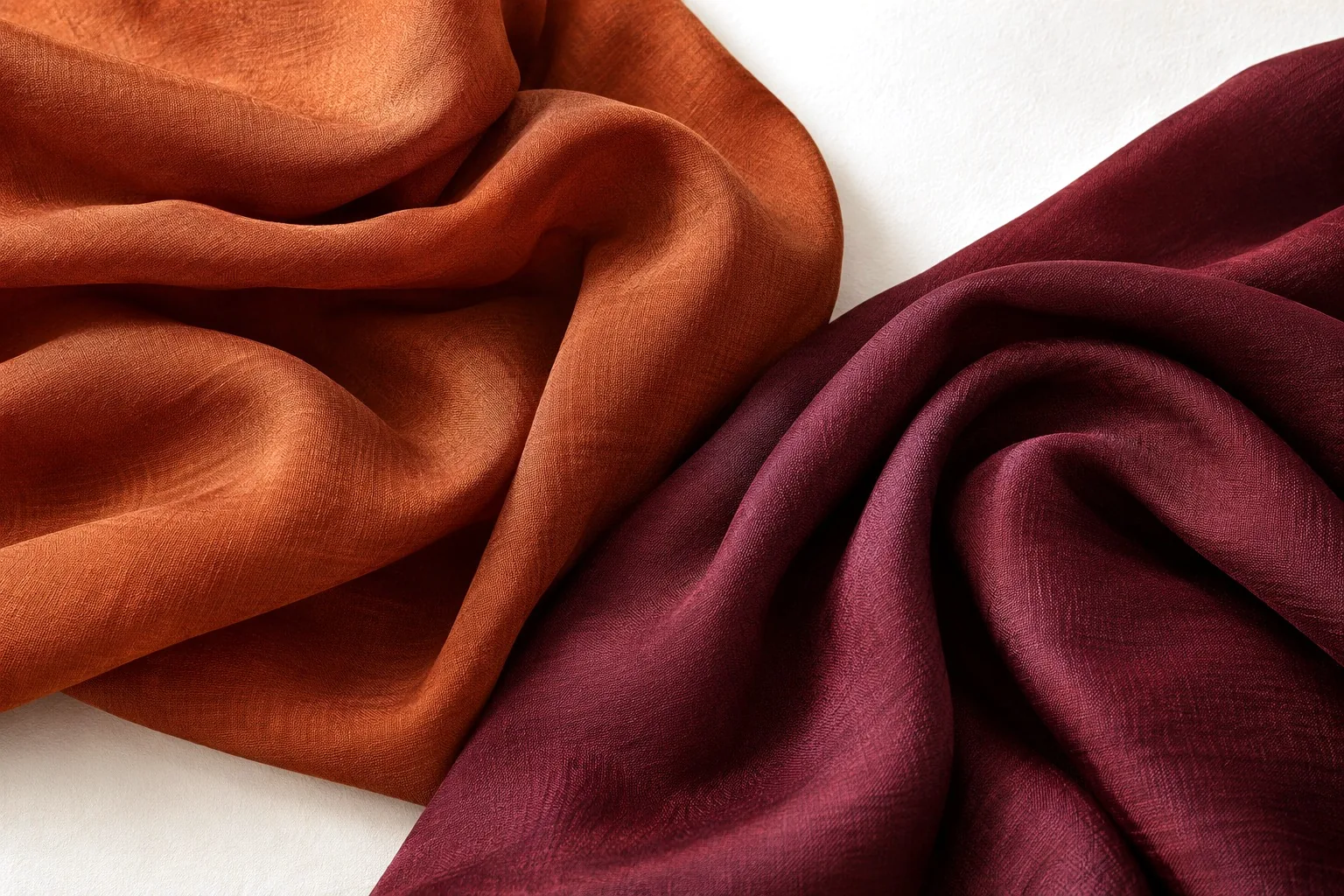
A pink against a coral
Hold a true pink and an orange coral at your jaw, one at a time.
Why, and how solid
The rule: Hold a true pink and an orange coral at your jaw, one at a time, and ask which one turns your face grayer and which one turns it more yellow-green.
Why: this asks how a cool pink and a warm coral change your face, which is what warmth does when you wear a color. A vein shows you a wrist in whatever light happens to be around.
Tradition Temperature is the hardest reading to make at home, and I found no study of how well this comparison matches a season.
One change at a time
Change one thing at a time, and repeat on another day.
Why, and how solid
Why: changing one thing shows which change did the work, and a second day filters out mood and light.
Strong Changing one thing at a time is standard measurement. Using a fabric swap to find a season is Tradition.
When answers disagree
If your answers disagree, let the result say between two.
Why, and how solid
Why: when two tests disagree, neither one is clear, and counting both at full weight would make the result look surer than it is.
Tradition The card then shows neutral-leaning, with both neighbors.
Why, and how solid
Sit by a window in daylight, with no direct sun and no colored wall behind you. Go bare-faced if you can, or note what you are wearing. Then compare colors on your face, one change at a time.
Then hold a cool white and a warm ivory and ask which one keeps your face clean. Same window, same face, one change.
On olive skin, gray or yellow-green is a steadier question than warm or cool, because an olive cast can move between the two with the day and the light. Warmth is the hardest reading to make at home, so the test asks about it last.
Which turns your face grayer, which more yellow-green?

no. veins are a weak swatch.
but a pink and a coral at your jaw can show more.
Questions people ask
Does the vein test work on deep skin?
Not well. Veins can be hard to see on deeper skin, and one app blog says vein tests lose accuracy there. I skip the test and use the window comparison, which looks at your face instead of your wrist.
Is the vein test ever right?
Sometimes it will match your result, and I have no number for how often. The pages that teach it call it a first clue, and I found no peer-reviewed study that checks it. Treat it as a clue, then confirm with something that looks at your face.
What about the burn-or-tan test?
I skip that one too. It measures how your skin reacts to sun, not how a color sits on your face, and the app blog that questions the vein test says the same about sun reaction on deeper skin. A tan can also deepen your value for a season, so tell the test if you are tanned right now. The medium to tan skin page says more.
Sources
- Metro Vein Centers, blog post "What your blue, green or purple veins are telling you." metroveincenters.com
- Personal Color AI, blog post on color analysis for dark skin tones, also the source for the olive skin description. It is an app blog, so I treat its claims as claims. personalcolorai.com
I read both only as search summaries, so I describe them in my own words and quote neither. I found no peer-reviewed validation of the vein test. How the evidence seals work
Already know your season? Jump to its lip colors.
The free test uses a window and your own clothes, not your wrist.